Automotive Cold Plates
Automotive cold plates (EV battery liquid cooling plates) sit under battery modules or at the bottom of the pack. Coolant removes cell heat and helps the pack stay in its target temperature window. XINWEI supplies LCP-A / LCP-B / LCP-C standard cold plates and builds to drawing or sample.
Automotive cold plates:
temperature under control
Battery charge and discharge efficiency, cycle life and safety margins all depend on temperature. A cold plate circulates coolant through internal channels under the cells, removing heat and helping control cell-to-cell temperature difference and peak temperature.
XINWEI supports cold plate projects with in-house mold development, stamping, laser cutting, 3600T die casting, CNC machining and CMM inspection. Welding, brazing and surface treatment are completed with qualified supply-chain partners.
Fits the pack
Outline, flow path and ports engineered around the battery pack.
Standard options
LCP-A/B/C formats can be quoted directly to shorten development.
Build to print
Drawing- or sample-based projects from prototype to volume supply.
Three proven automotive cold plates, ready to quote
Production-proven formats for different battery platforms. Outline, flow path and ports can be adapted; final parameters follow the technical agreement.
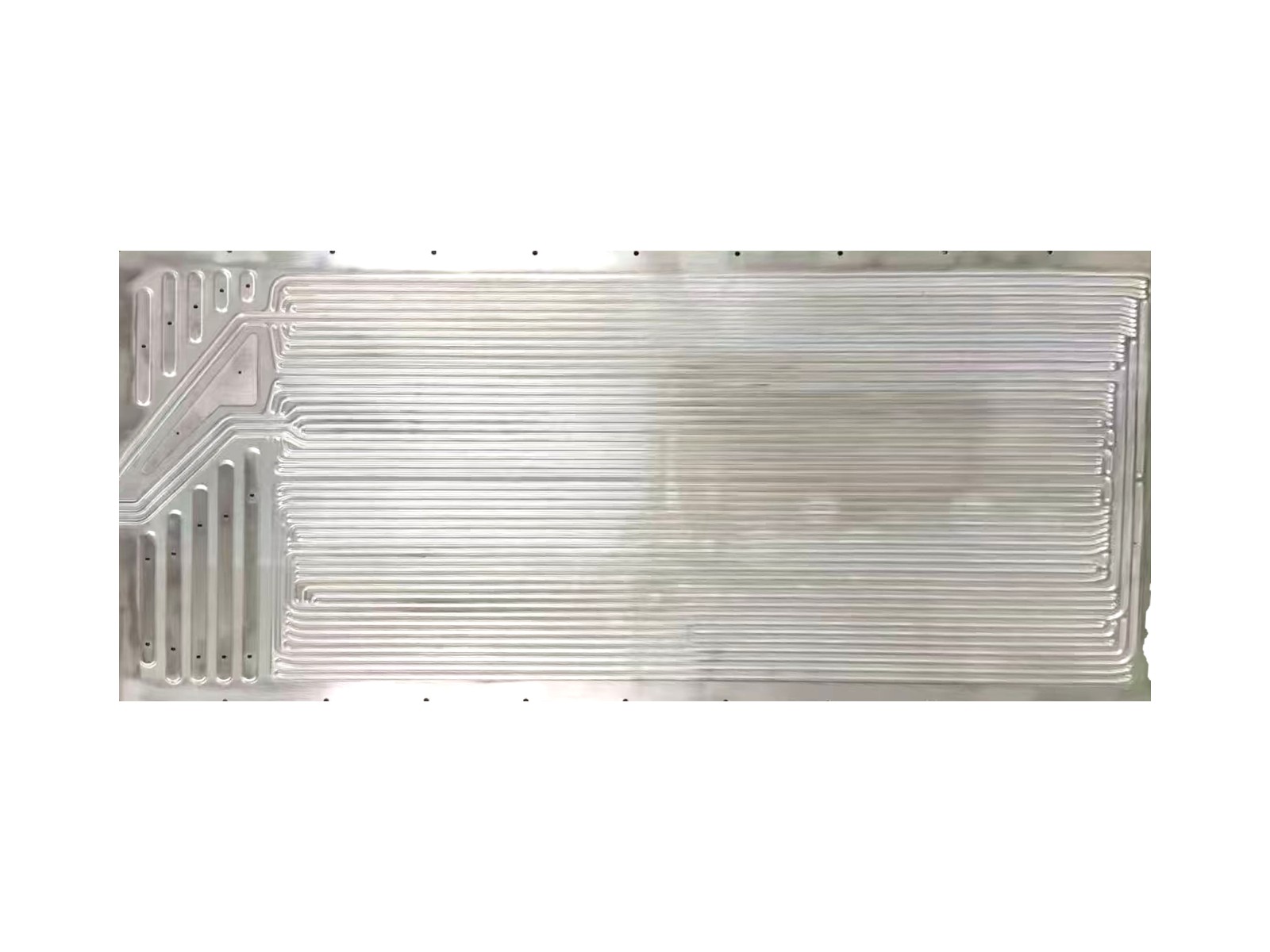
Compact cold plate
- Reference size
- 1260 × 560 × 0.8 mm
- Flow path
- Parallel channels
- Application
- Compact PHEV / BEV platforms
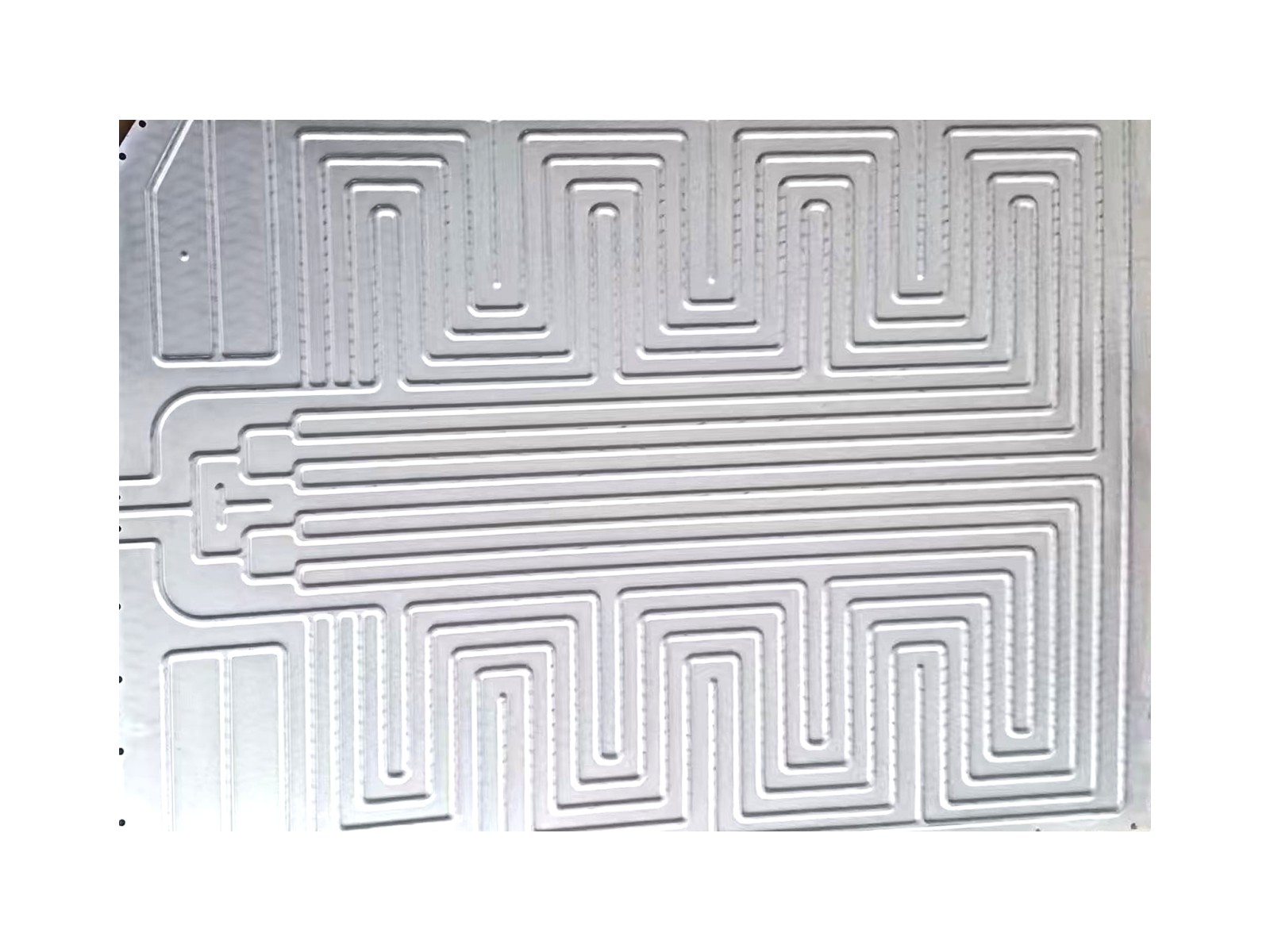
Serpentine cold plate
- Reference size
- 1265 × 881 × 1.0 mm
- Flow path
- Serpentine channels
- Application
- Mid-size sedan / SUV platforms
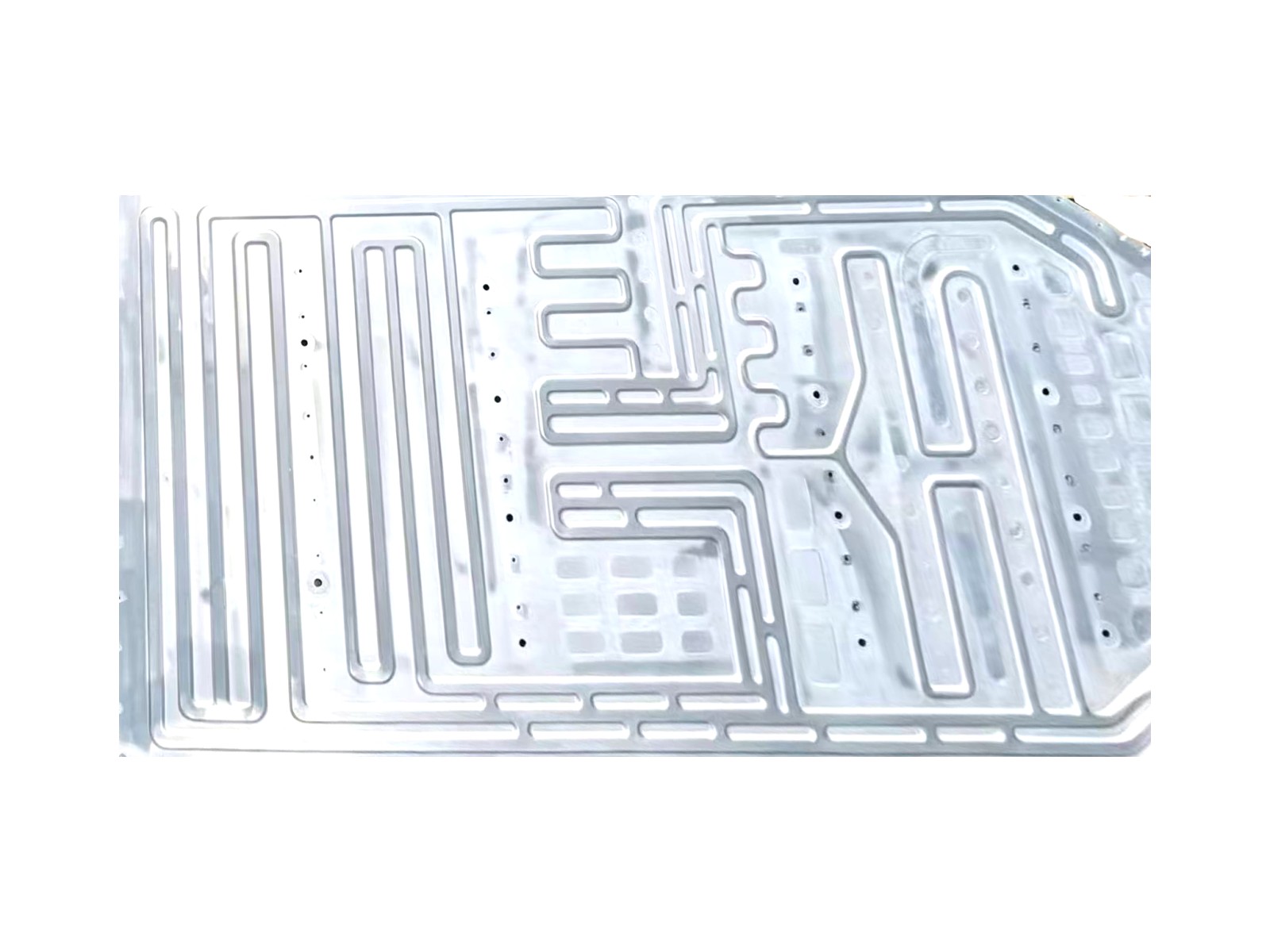
Dual-zone cold plate
- Reference size
- 1880 × 1038 × 1.0 mm
- Flow path
- Dual-zone parallel channels
- Application
- Large-format BEV platforms
Note: B*D and A*ON are masked references used only to describe application experience. No brand affiliation or exclusivity is implied.
Critical processes for automotive cold plates
Mold, forming, cutting, machining and inspection determine cold plate quality. These steps are handled in-house; welding, brazing and surface treatment are completed with qualified suppliers.
Mold development
In-house forming molds, fixtures and gauges with DFM review and fast tool correction.
Stamping & laser cutting
Sheet metal channels formed by stamping; outlines, holes and ports cut by fiber laser.
3600T die casting & CNC
3600T die casting for structural parts; CNC machining for faces, holes and interfaces.
CMM inspection
Key dimensions, holes and features measured to drawing; leak testing per project agreement.
Where automotive cold plates are used
Cold plates are engineered around the battery pack, vehicle package and duty cycle.
Passenger EVs
BEV / PHEV pack cold plates with pack-specific flow paths and ports.
Commercial vehicles
High-capacity packs with vibration resistance and large coolant ports.
Modules & CTP structures
Cold plates designed with modules and structural parts to reduce assembly steps.
Motor & controller
Cold plates for power modules and controller housings, built to package.
Custom automotive cold plate process
Send a drawing, sample or technical agreement; we review, develop tooling, produce samples, inspect and deliver.
Drawing / sample
Confirm pack structure, heat load and interfaces
Process review
DFM, material and process routing
Tooling & samples
Tool build, sample run and validation
Inspection
Dimensions, appearance, flatness and leak (as required)
Volume delivery
Pilot runs and scheduled production
Frequently asked questions
What is an automotive cold plate?
An automotive cold plate is a liquid-cooled heat-transfer component mounted under or between battery modules. Coolant circulates through internal channels to remove cell heat and keep the battery within its target temperature range.
What is the difference between automotive and energy-storage cold plates?
Automotive plates emphasise structural strength, vibration resistance, package and weight; energy-storage plates are often larger and focus on long-term temperature uniformity and pressure drop. Both are engineered to the project.
Which aluminum alloys are used?
3003, 3004 and 6061 aluminum alloys are common. Alloy and thickness are selected based on thermal design, structural requirements, forming and joining processes.
What is needed for a custom cold plate?
Battery pack structure and mounting envelope, heat load and flow rate, port locations, material and surface treatment, volume and milestones. Drawings or samples help us evaluate faster.
How are cold plates inspected?
Dimensions, appearance, flatness and CMM inspection are performed to drawing. Leak and pressure tests are executed per project agreement, with records archived by batch.
Can you provide prototypes?
Yes. Laser cutting or CNC can validate the structure before production tooling, followed by tooled samples, pilot runs and volume production.
Need an automotive cold plate or custom manufacturing?
Send your pack structure, heat load, material and volume for a selection proposal, sample plan and quotation.